In Recognition
Special Thanks
To the men who gave us the skies
In Recognition
To the men who gave us the skies
The Creators
Writer & Editor
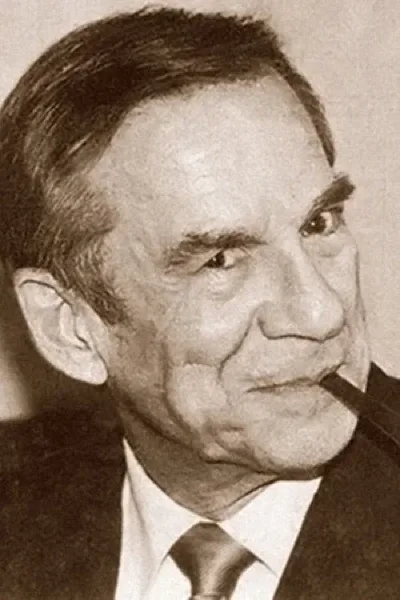
Robert Kanigher (1915–2002) was one of the most prolific writers in American comics history, authoring thousands of stories over five decades for DC Comics. His war comics were legendary: unflinching, humanistic, and morally serious in ways the genre rarely attempted.
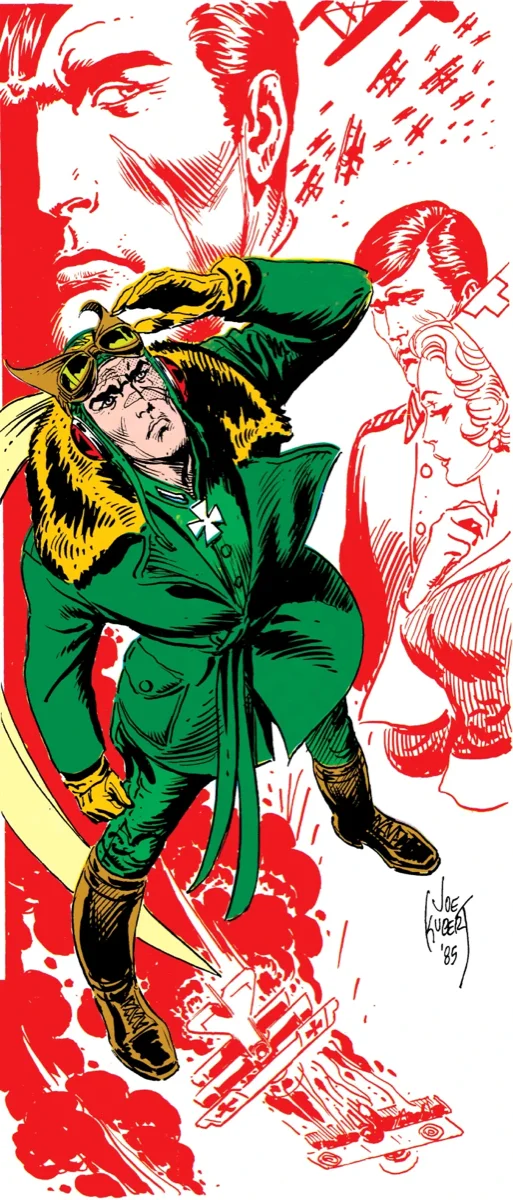
Enemy Ace was perhaps his finest creation. Kanigher understood that the most powerful anti-war statement was not to demonize the enemy, but to show him as fully human, as tortured by his effectiveness as his opponents were by their defeat. Von Hammer emerged from Kanigher's imagination fully formed: tragic, noble, and doomed.
Kanigher's greatest triumph with Enemy Ace was creating a protagonist who was a master of aerial slaughter, yet entirely devoid of bloodlust. He presented a tragic figure who excelled at the grim business of war while remaining deeply tortured by its cruelty.
— Les Daniels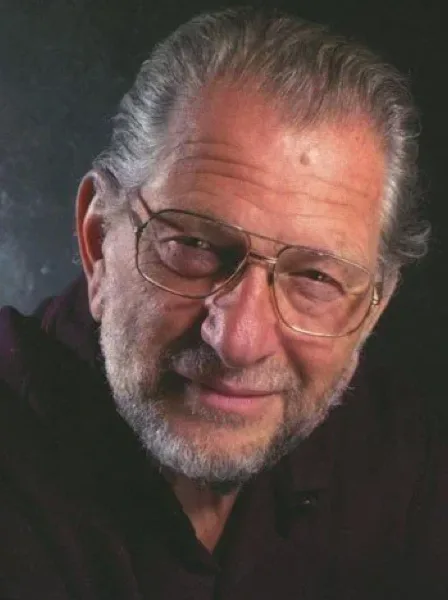
Artist & Co-Creator
Joe Kubert (1926–2012) was one of the towering figures of American comic art, with a career spanning more than six decades. His work defined the visual language of war comics, expressive, kinetic, and deeply human even in its most brutal moments.
For Enemy Ace, Kubert created a visual world of astonishing richness: the cramped cockpit of the Fokker, the infinite sky above the Western Front, the weight of a man's conscience in the set of his jaw. No artist before or since has drawn von Hammer with the same authority.
Kubert didn't glorify combat; he emotionalized it. His lines were charged with a primitive, savage energy that stripped away the romance of war and left only the raw, human cost.
— Jim SterankoAdditional Recognition
While the foundations of Enemy Ace were unforgettably forged by Robert Kanigher and Joe Kubert, the enduring legacy of Hans von Hammer has been shaped by a diverse collective of comic book masters. Across six decades, these historical art contributors — spanning legendary writers, virtuoso pencilers, hyper-detailed painters, and definitive typographic letterers — have stepped into the skies of the Hammer's world.
Each creator brought an individual creative philosophy to the property, ensuring the character seamlessly evolved through changing eras of comic book storytelling. From the gritty front lines of the Bronze Age to the haunting, painted realism of modern graphic novels, the following alphabetical catalog highlights the vital contributors who expanded, deepened, and preserved the anti-war tragedy of DC's premier flying ace.
Artist (Selected Issues) · 1941–2022
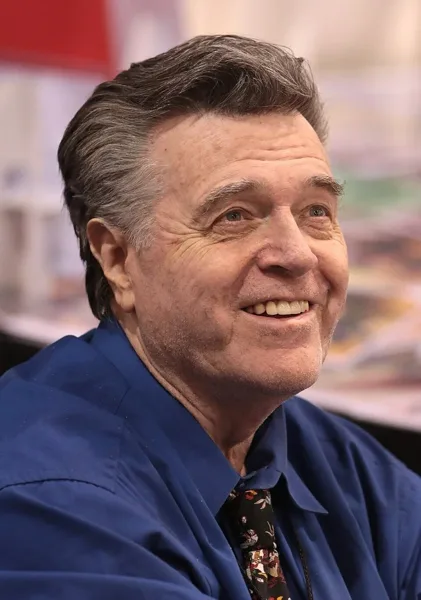
The legendary, industry-redefining comic book artist who brought his hyper-detailed realism and dynamic anatomical layouts to Enemy Ace in the early 1970s. Adams illustrated the landmark story in Star Spangled War Stories #144 and drew the iconic cover for Detective Comics #404, delivering a historic, genre-crossing team-up between Batman and a phantom-like projection of Hans von Hammer.

Artist (War in Heaven, 2001)
A veteran comic artist and master inker whose collaborative artistry proved vital to modern Enemy Ace lore. Alamy provided crucial layout breakdowns and finished ink textures over Chris Weston's pencils during the publication of Enemy Ace: War in Heaven, acting as the creative anchor that maintained a unified, dark, and cinematic visual atmosphere across the entire miniseries.
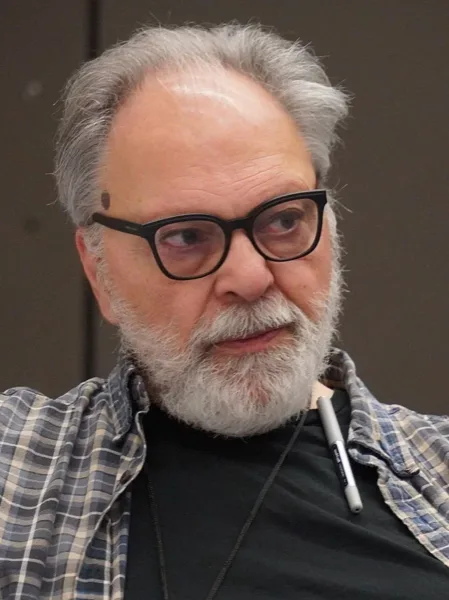
Artist (Selected Issues)
A celebrated, trailblazing comic creator who teamed up with writer Robert Kanigher in the late 1970s to illustrate a memorable run of Enemy Ace features for DC's Men of War anthology. Utilizing a striking, high-contrast chiaroscuro technique and a bold abstract sensibility, Chaykin brought a noble, brooding aesthetic to the aging pilot and delivered highly dynamic, visually arresting aerial combat sequences.

Writer (War in Heaven, 2001)
The critically acclaimed, definitive modern writer of war fiction who brought his grim, uncompromising, and deeply humanist vision to Hans von Hammer's twilight years. Ennis authored the monumental, Eisner-nominated 2001 miniseries Enemy Ace: War in Heaven, masterfully chronicling the aging Baron's intense moral struggle as he is forced back into the skies to defend his homeland during the horrors of World War II.

Artist (Selected Issues / War in Heaven, 2001) · 1926–2018
A legendary titan of mid-century war comics who contributed beautifully to classic Enemy Ace layouts before returning decades later to illustrate the second half of Garth Ennis's modern masterpiece, War in Heaven (2001). Heath's unmatched eye for mechanical precision, fluid battlefield layouts, and gritty realism perfectly captured the exhausting, claustrophobic nature of a World War II fighter cockpit.
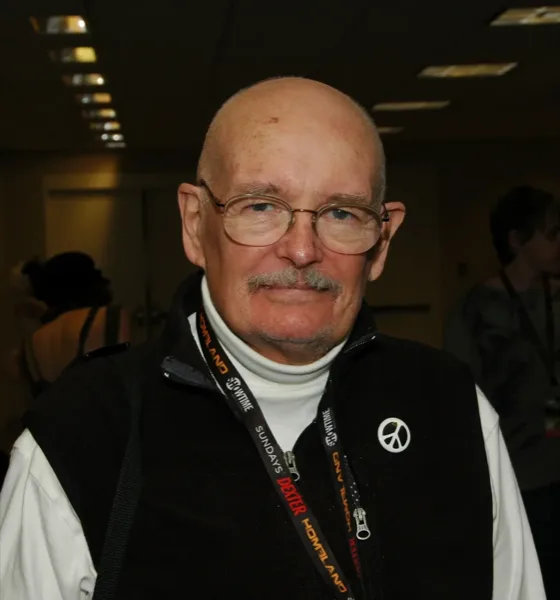
Writer (Selected Issues) · 1939–2020
One of DC Comics' most influential modern writers, who carried the Enemy Ace torch into the late 1970s by introducing a trademark layer of moral seriousness and philosophical complexity to the character. O'Neil famously penned the historic crossover sequence in Justice League of America #159–160, where the modern superhero team travels backward through time to fight alongside Hans von Hammer during World War I.

Writer / Artist (War Idyll, 1990)
The award-winning master illustrator who wrote and fully painted the revolutionary 1990 prestige graphic novel Enemy Ace: War Idyll. Moving completely away from traditional comic line-art, Pratt utilized a raw, evocative mixed-media watercolor style to explore a dying Hans von Hammer reflecting on his memories with a modern veteran, creating a critically acclaimed milestone that permanently elevated the character into fine art literature.
Writer / Artist (Selected Issues) · 1917–1994
A master storyteller and celebrated veteran of daily newspaper strips who stepped into the cockpit of Enemy Ace during the Bronze Age. Pulling from his decades of technical experience drawing his own legendary aviation comic Johnny Hazard, Robbins wrote and penciled a series of high-flying adventures for Star Spangled War Stories, with his creative fingerprints permanently stamped onto the character's legacy through Detective Comics #404.
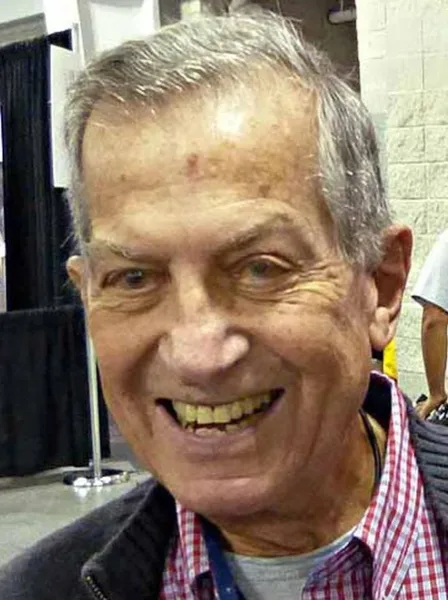
Letterer · 1927–2016
The legendary DC Comics letterer whose distinctive, razor-sharp hand-lettering graced the earliest foundational Enemy Ace issues. Saladino's aggressive title designs, unique sound effect typography, and clean narrative captions became deeply identified with DC's entire war line, fundamentally shaping the visual identity and atmosphere of the period.
Artist (Selected Issues) · 1921–2012
An acclaimed comic book artist and master of historical military illustration who contributed heavily to Enemy Ace during the strip's Silver Age run. Renowned for his meticulously researched EC Comics war art style, Severin's finely detailed, grounded rendering of WWI military uniforms, machinery, and trench landscapes offered a beautifully rigid, realistic contrast to Joe Kubert's expressionistic visuals.

Writer / Artist (Guns of the Dragon, 1996)
The acclaimed writer, illustrator, and Western genre veteran who firmly integrated Hans von Hammer into the broader chronology of the DC Universe. Truman wrote and illustrated the 1996 adventure miniseries Guns of the Dragon, treating readers to a rare look at a retired, 1920s-era von Hammer navigating the chaotic skies of geopolitical China alongside classic DC stalwarts like Bat Lash.

Artist (War in Heaven, 2001)
A highly regarded British artist celebrated for his incredible technical precision and uncompromising architectural accuracy. Weston served as the primary pencil artist for the first half of the historic 2001 miniseries Enemy Ace: War in Heaven, using his meticulous line style to perfectly recreate the historical reality of late-stage World War II military aircraft and German airbases.
Hans von Hammer endures because Robert Kanigher and Joe Kubert refused to make war simple. They gave us a character who wins every battle and loses something irreplaceable in each one. That tension, between excellence and conscience, duty and horror, is what makes Enemy Ace not just a great war comic, but a great comic. Full stop.
— This site, with gratitude